サマーセール開催中!会計時に30%OFF!


Ancient Dzi Shop
Ancient Carnelian Six Eye Lotus Dzi Bead — 24.1 mm, Beveled Octagon, End Damage, 500–1,000+ Years (AC-111026-6EL)
Ancient Carnelian Six Eye Lotus Dzi Bead — 24.1 mm, Beveled Octagon, End Damage, 500–1,000+ Years (AC-111026-6EL)
We never retouch our photos. What you see is exactly what you will receive.
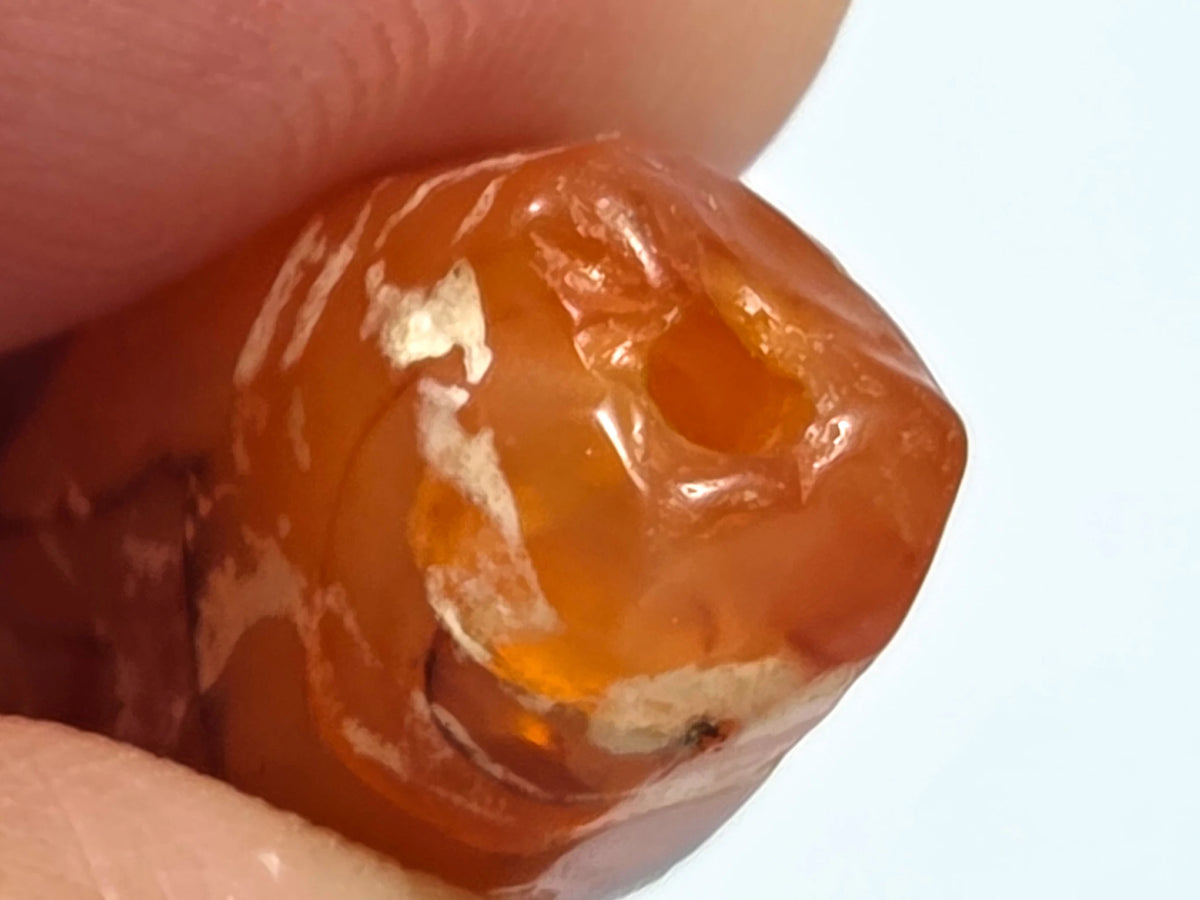
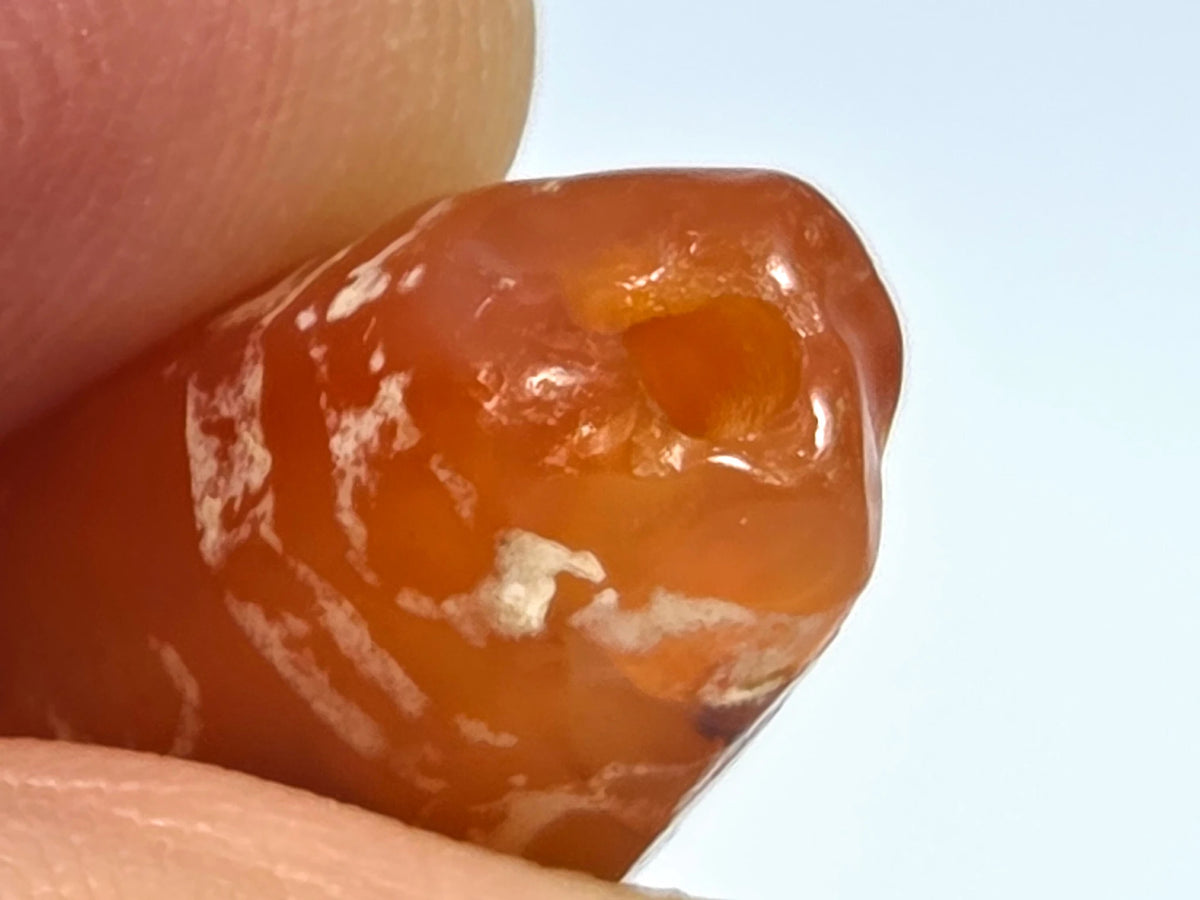
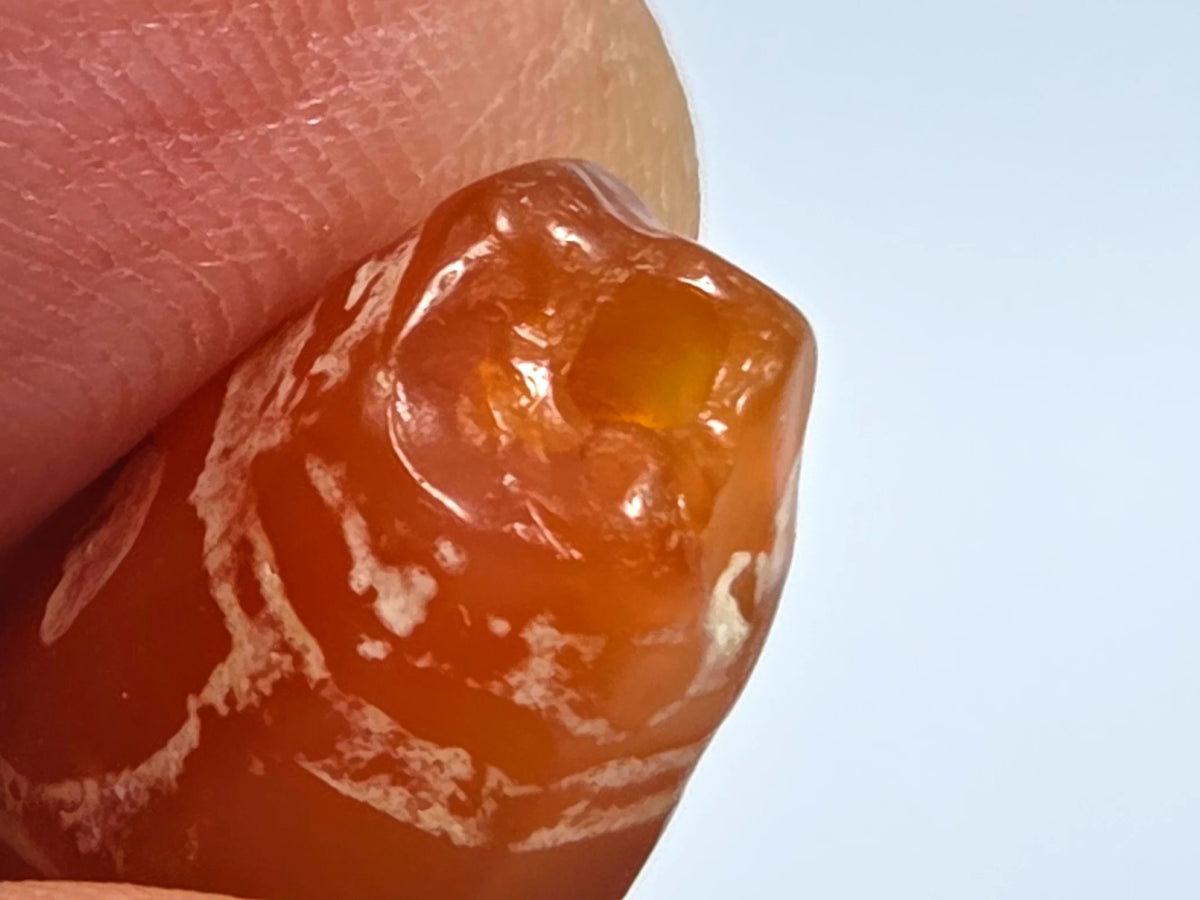
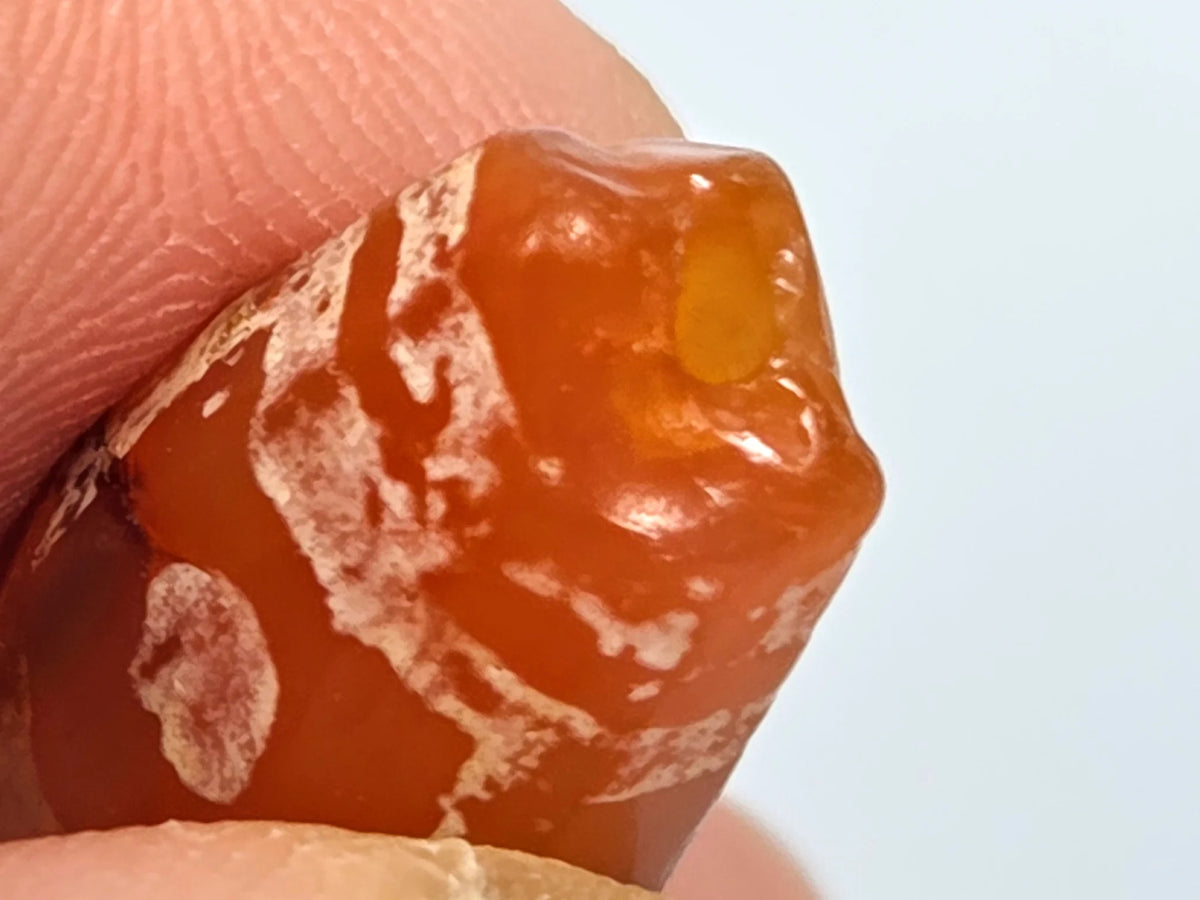
Please read before purchase: one end of this bead is significantly damaged. The macro photographs (images 6–9) show it in detail, and it is described fully below.
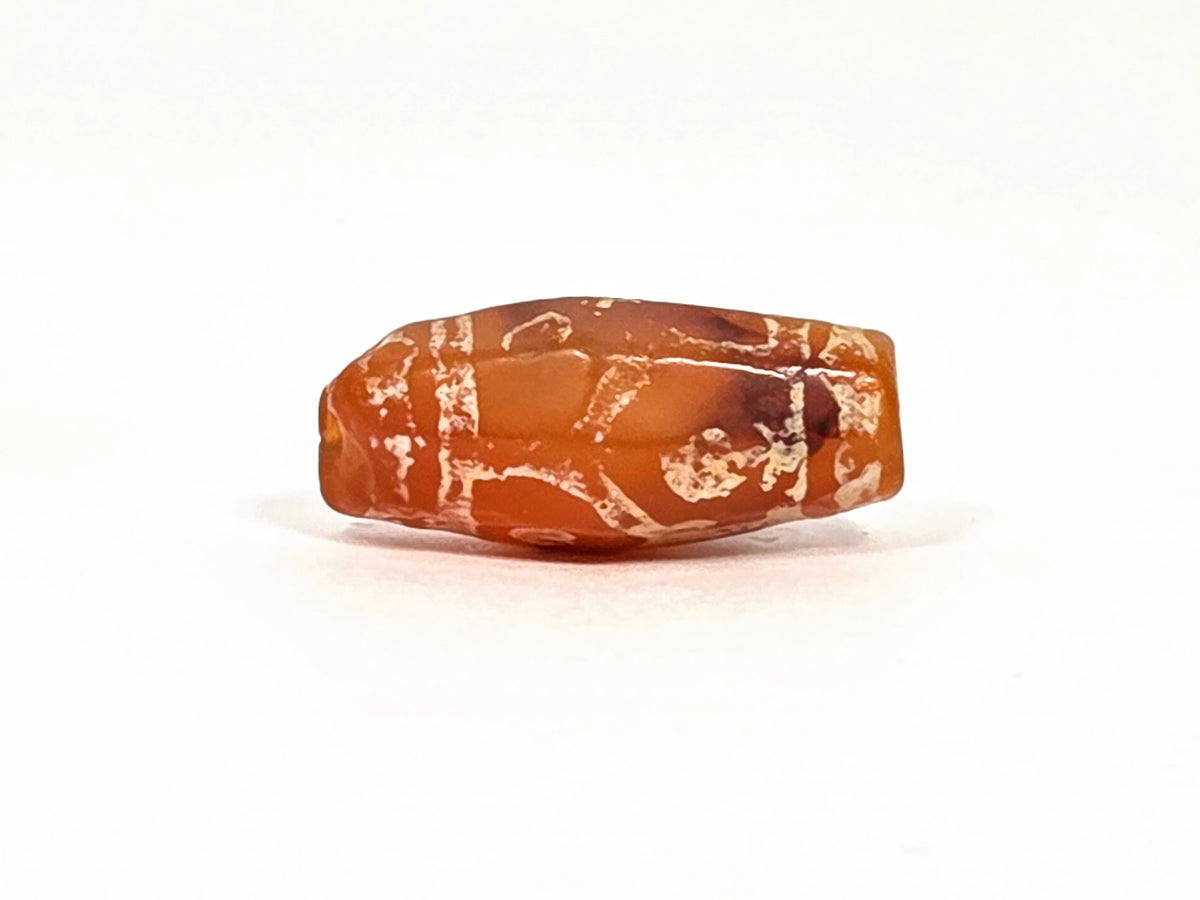
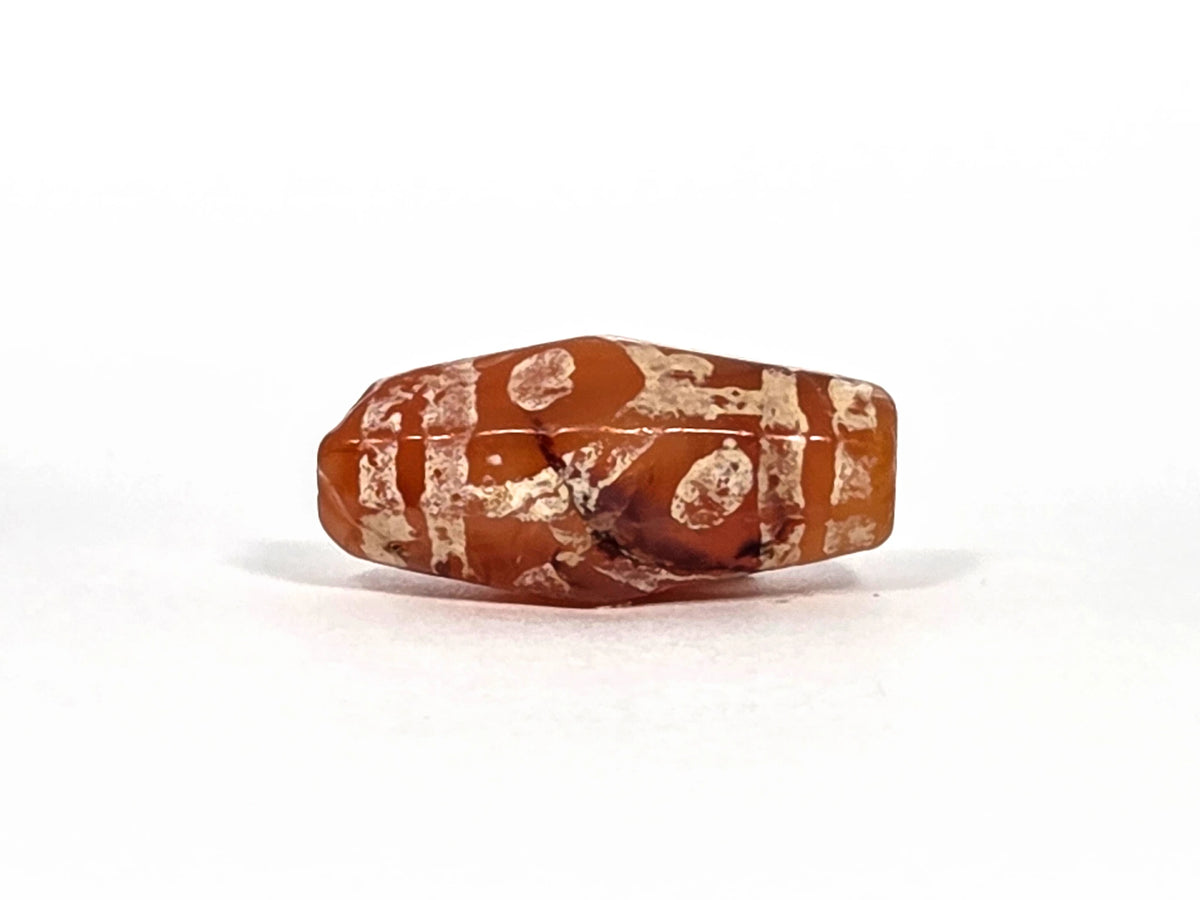
This bead measures 24.1 mm along its long axis and 11.7 mm at its widest point. It is not round: it is beveled into an eight-sided prism, with eight flat faces running along its length and softened ridges where the faces meet — a form that belongs to a distinct production style of etched carnelian made across Central and South Asia during the first millennium and into the early medieval period. The stone is natural carnelian, a warm, translucent orange that deepens toward red, with darker red-brown veins of natural colour running through it in places (images 1 and 2).
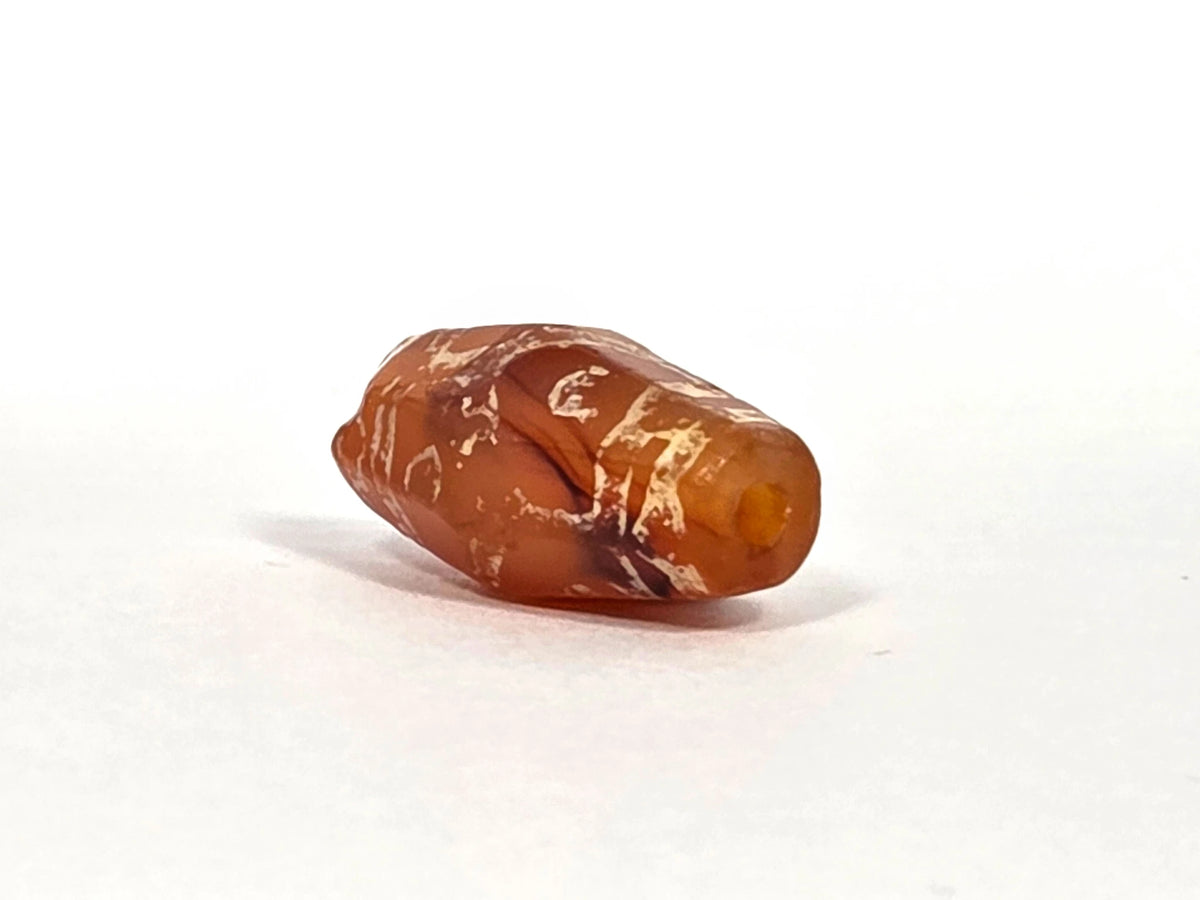
The motif is the six eye lotus, etched in cream-white and spread across the faces so that it only completes itself as the bead is turned. The eyes take different forms from face to face: solid oval eyes (image 2), open ring and C-shaped eyes (images 1 and 3), set among curving lotus-petal lines and crossing strokes. Paired bands close the design near each end. No single face shows the whole composition — like most carnelian dzi of this style, it reads as one continuous design around the stone.
The white decoration has crystallised heavily. Across every face the lines are granular and slightly raised, feathered at their edges where the white has spread into the surrounding carnelian over the centuries. This mineral texture is among the most reliable physical indicators of genuine antiquity and cannot be reproduced artificially. The carnelian between the lines keeps a soft, glassy gloss.
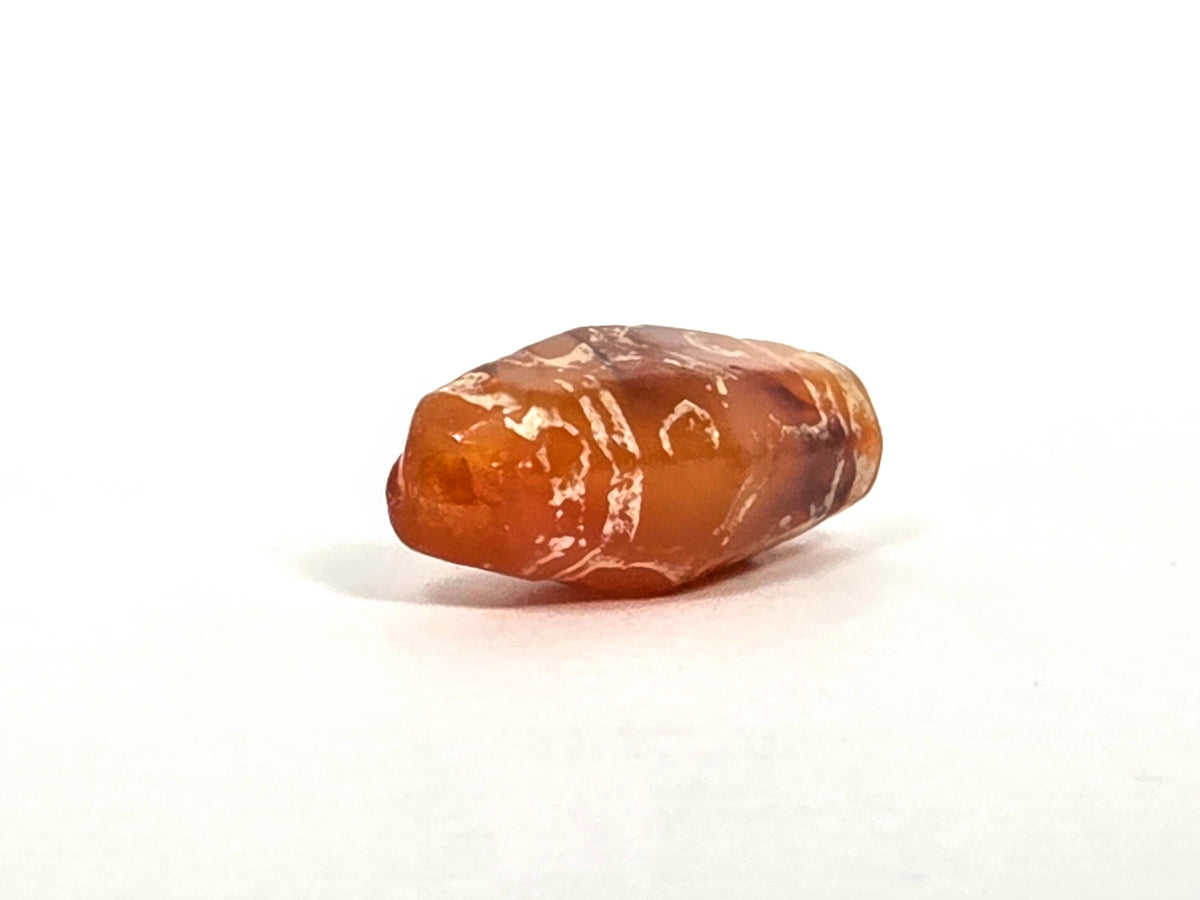
Condition note: damage at one end. One end of the bead has lost a substantial amount of stone. Around the drill opening the surface is broken by several overlapping chip scars, so that the end is uneven and lumpy rather than cleanly finished, and the drill opening sits within an irregular, cratered area instead of on a flat end face (images 5–9). The damage reaches back from the tip onto the beveled faces, taking part of the end bands and the edge of the etched decoration with it. The broken surfaces have since softened and taken on a gloss of their own, which suggests the damage is old rather than recent. The drill hole at this end remains open, and we do not see a crack running from the damaged end into the body of the bead. Even so, this is a significant, visible, permanent loss, and it is the main condition point for this bead. Please study images 5–9 carefully before purchasing. The opposite end (image 4) is intact.
The Six Eye Lotus Motif
Etched carnelian is one of the oldest decorated bead traditions in the world. It began in the Indus Valley civilisation and continued for millennia across Central and South Asia: an alkaline paste was painted onto the carnelian and fired, leaving a permanent white design in the stone. Beads made this way were traded from the Persian Gulf to the Tibetan plateau, where they came to be treasured as pema raka and valued alongside agate dzi. The eye is the most widely recognised protective motif in this tradition, standing for awareness and the turning-away of harm. Six eyes are traditionally associated with the six perfections of Buddhist practice and with protection extending in every direction, and the lotus adds purity and spiritual awakening — the bloom that rises unstained from muddy water. Together, the six eye lotus offers protection and clarity on the path, carried by a bead that has already travelled through many centuries of human hands.
Specifications
Motif: Six Eye Lotus — cream-white solid oval, ring and C-shaped eyes among lotus-petal lines and crossing strokes; paired bands near each end; heavily crystallised decoration
Length: 24.1 mm
Diameter: 11.7 mm
Form: Beveled eight-sided prism (octagonal cross-section)
Material: Natural carnelian
Color: Translucent orange to red-orange carnelian with natural red-brown veining; cream-white etched decoration
Bloodspots: None observed
Tier: Ancient
Age Estimate: Ancient — 500–1,000 years or more
Condition: Significant old damage at one end — multiple chip scars around the drill opening, uneven end surface, partial loss of the end bands (images 5–9). Drill hole open. No crack seen running into the body. Opposite end intact. Heavy crystallisation in the decoration, consistent with age.
Product ID: AC-111026-6EL
Collections: Ancient Tibetan Dzi · Carnelian Dzi · All Products
Other ancient carnelian dzi in the collection:
- AC-101026-CL6 — Ancient Carnelian Six Cross & Longevity Motif Bead, Tapered Octagon, 27 mm
- AC-083126-2EHGTT — Ancient Two Eye, Heaven Gate & Tiger Tooth Carnelian Dzi, 23.7 mm
- AC-030623-DDIE — Ancient Round Double Diamond Eye-in-Eye Carnelian Dzi, 18.9 mm
- AC-030823-5TS2 — Ancient Five Tiger Stripe Carnelian Dzi with Calcification, 28.6 mm
Further reading: Carnelian Dzi Beads: The Pema Raka Guide · Where Do Dzi Beads Come From?
Every piece at Ancient Dzi Shop is photographed unretouched and described exactly as found. What you see is what you will receive.
Photos: Unretouched images of the exact bead listed. Nine product photographs: three white-background views of the beveled faces and the six eye lotus decoration (images 1–3); an angled view of the intact end (image 4); an angled view of the damaged end (image 5); and four hand-held macro close-ups of the damaged end, showing the chip scars around the drill opening from different angles (images 6–9).
#ancientdzibeads #carnelian #carneliandzi #etchedcarnelian #pemaraka #sixeyedzi #lotusdzi #ancientcarnelian #ancientdzi #dzicollector #authenticdzi #tibetanantiques #ancientdzishop #tibetanamulet #dzibead
受取状況を読み込めませんでした