Summer Sale! Enjoy 30% Discount At Checkout


Ancient Dzi Shop
Ancient Four Diamond Eye Carnelian Bead — Eight-Sided Faceted Barrel 31.1 mm 700–1000 Years (AC-101226-EC)
Ancient Four Diamond Eye Carnelian Bead — Eight-Sided Faceted Barrel 31.1 mm 700–1000 Years (AC-101226-EC)
We never retouch our photos. What you see is exactly what you will receive.
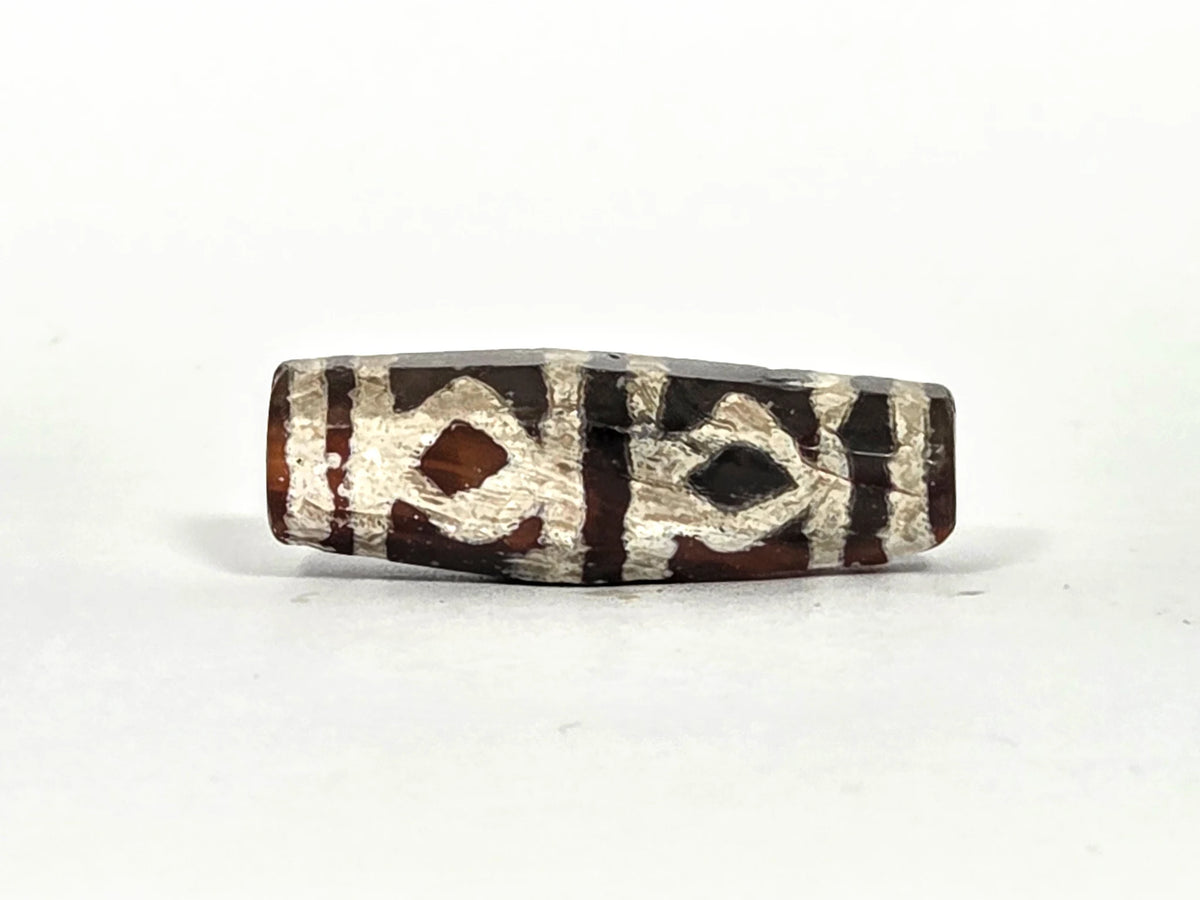
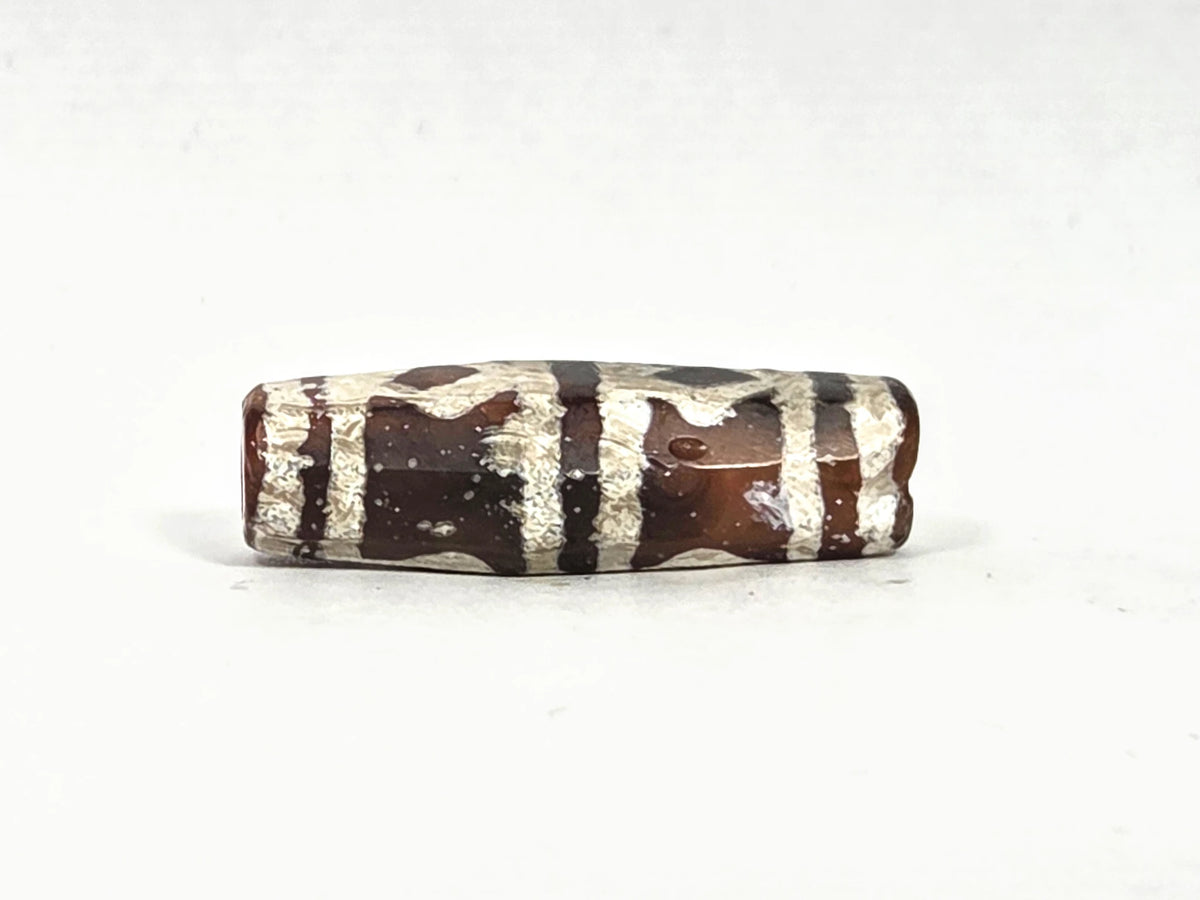
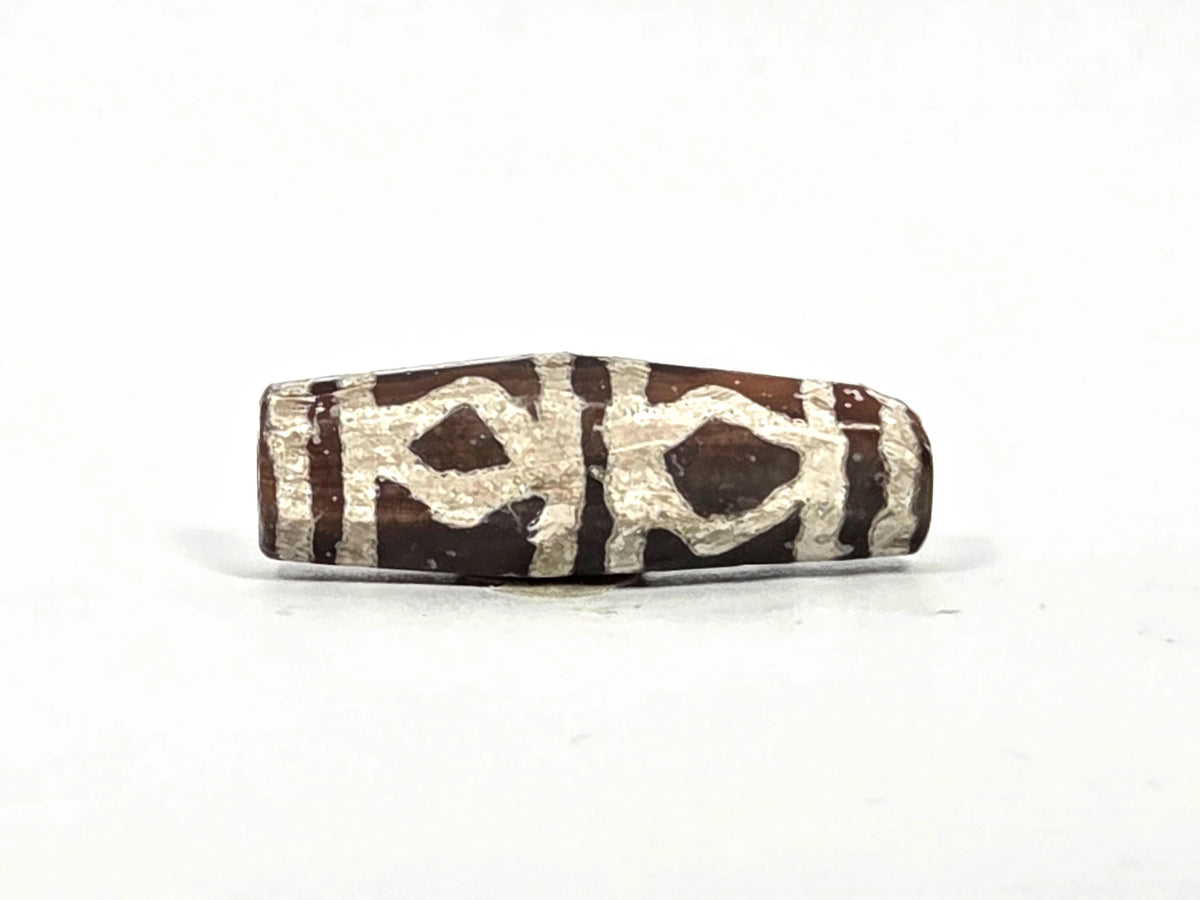
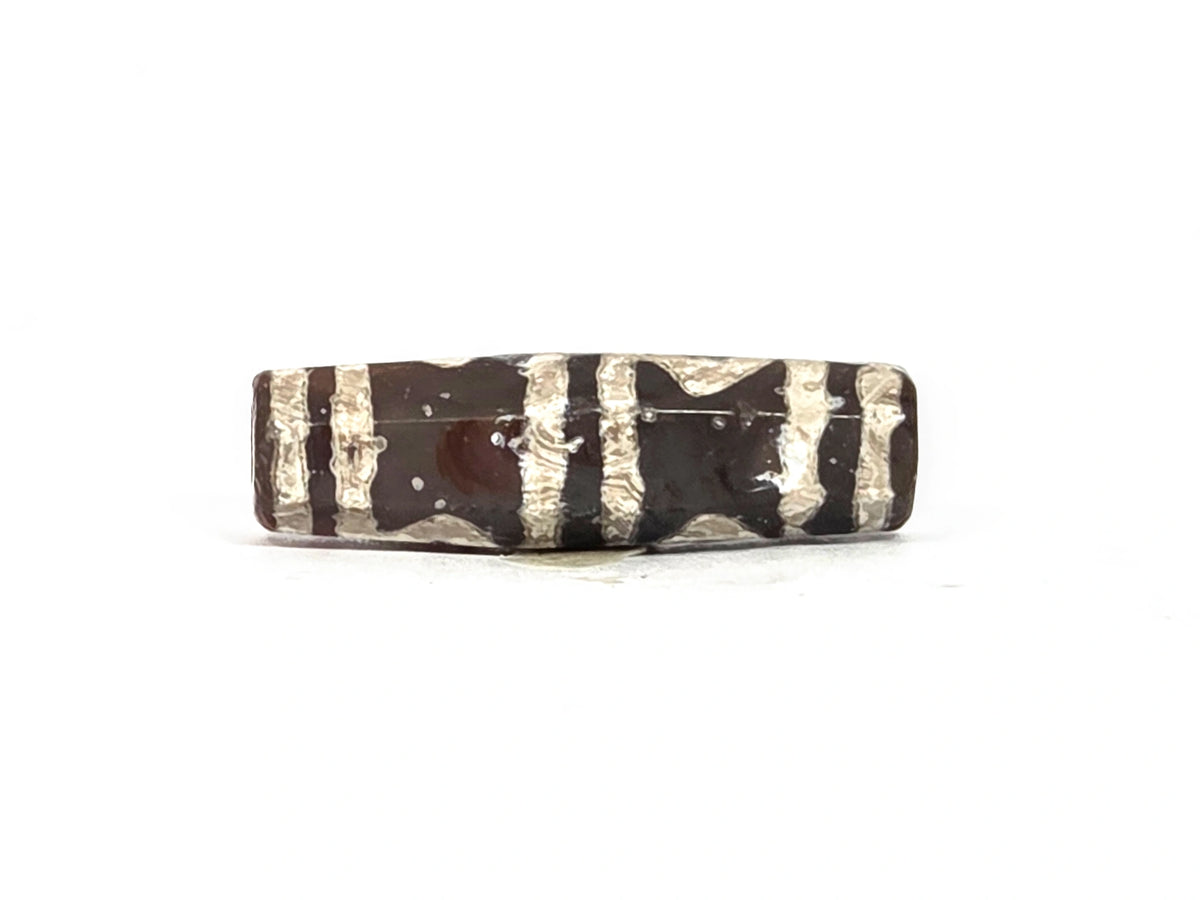
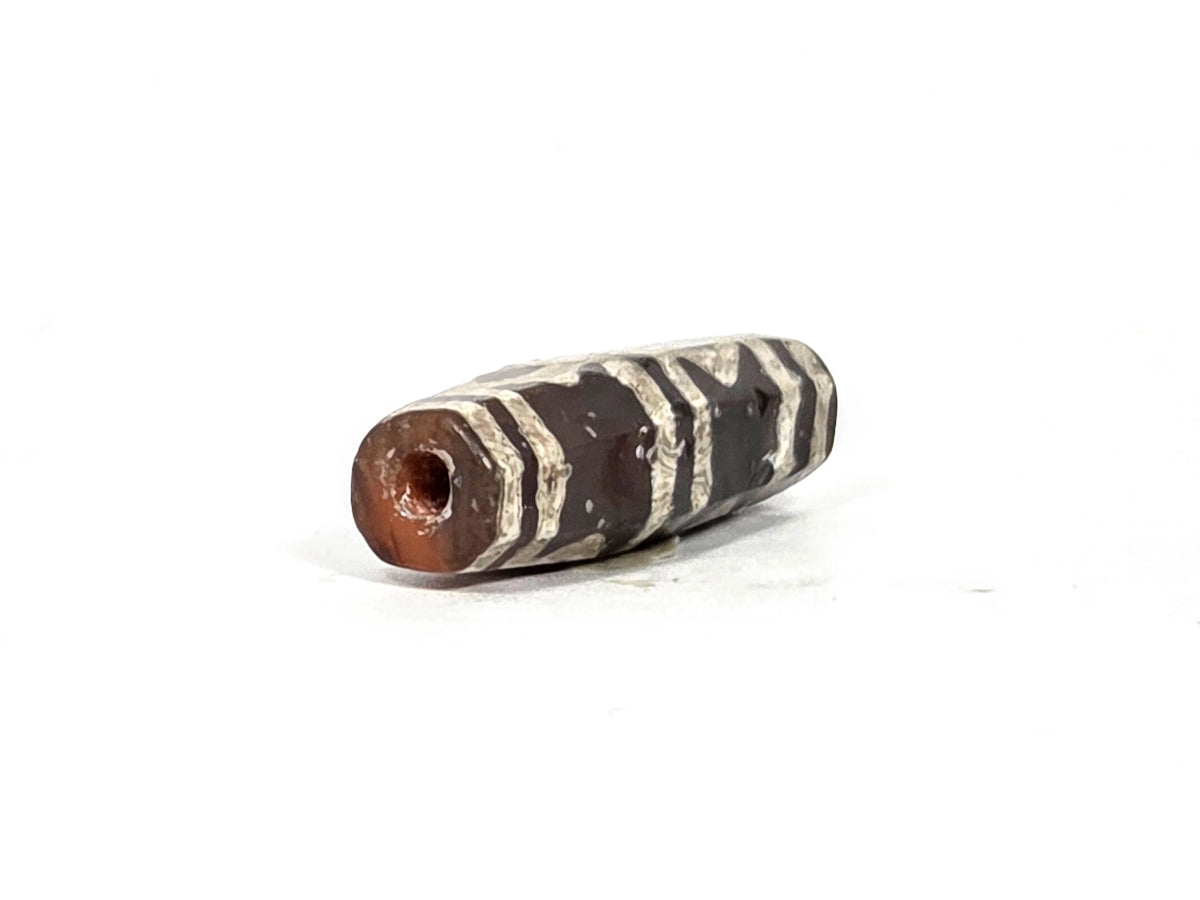
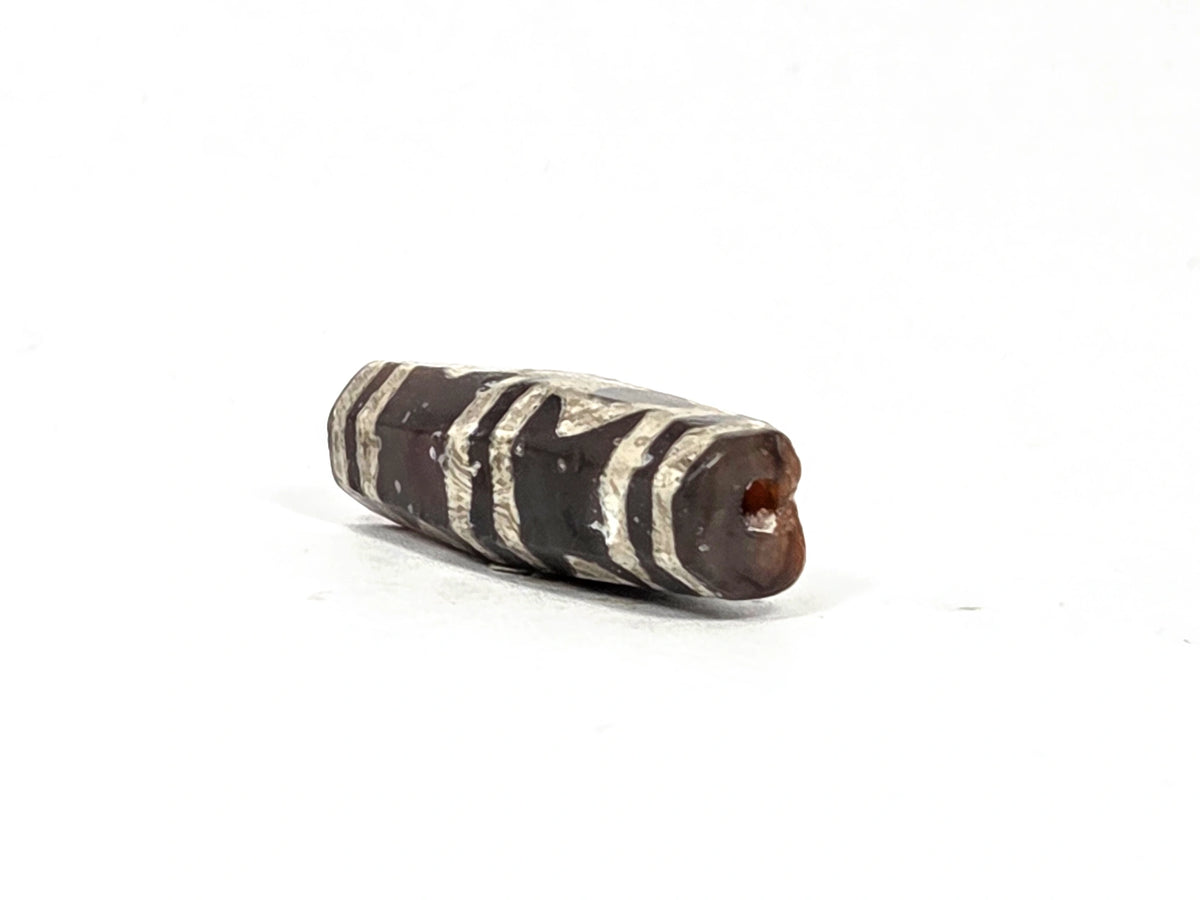
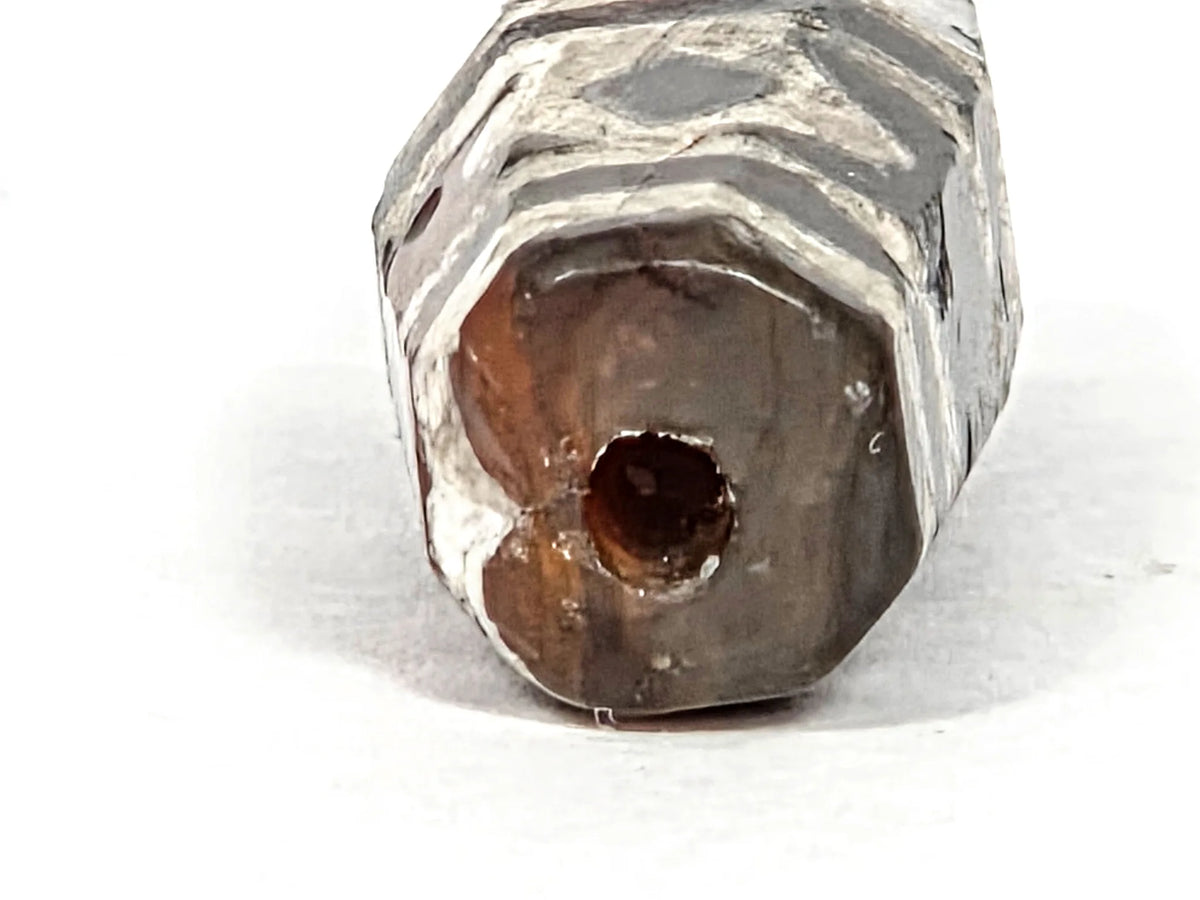
This bead measures 31.1 mm along its long axis and 10.4 mm at its widest point. Its most immediately distinctive feature is its form: rather than the round or oval cross-section of most ancient beads, this piece has an octagonal barrel — eight flat faceted faces running the full length of the bead, meeting at defined ridges, giving the cross-section a regular eight-sided polygon profile. This form required a fundamentally different approach at the shaping stage than a round barrel: each of the eight faces had to be ground flat and brought into alignment with the others before any surface work could begin. The resulting silhouette is angular and geometric even before the motif is considered, and the interplay between the flat faceted planes and the etched motif that sits across them gives this bead a visual complexity that round-barrel pieces of the same type do not have.
The carnelian itself is warm reddish-brown to deep amber, with a translucency that becomes visible in direct light — the interior of the stone has depth and warmth that surface photographs only partially capture. Carnelian of this color and translucency was among the most valued materials in the ancient bead-making traditions of Central and South Asia, and the investment of additional labor required to facet this piece into eight sides rather than simply rounding it reflects the quality of the stone and the seriousness of the commission it represented.
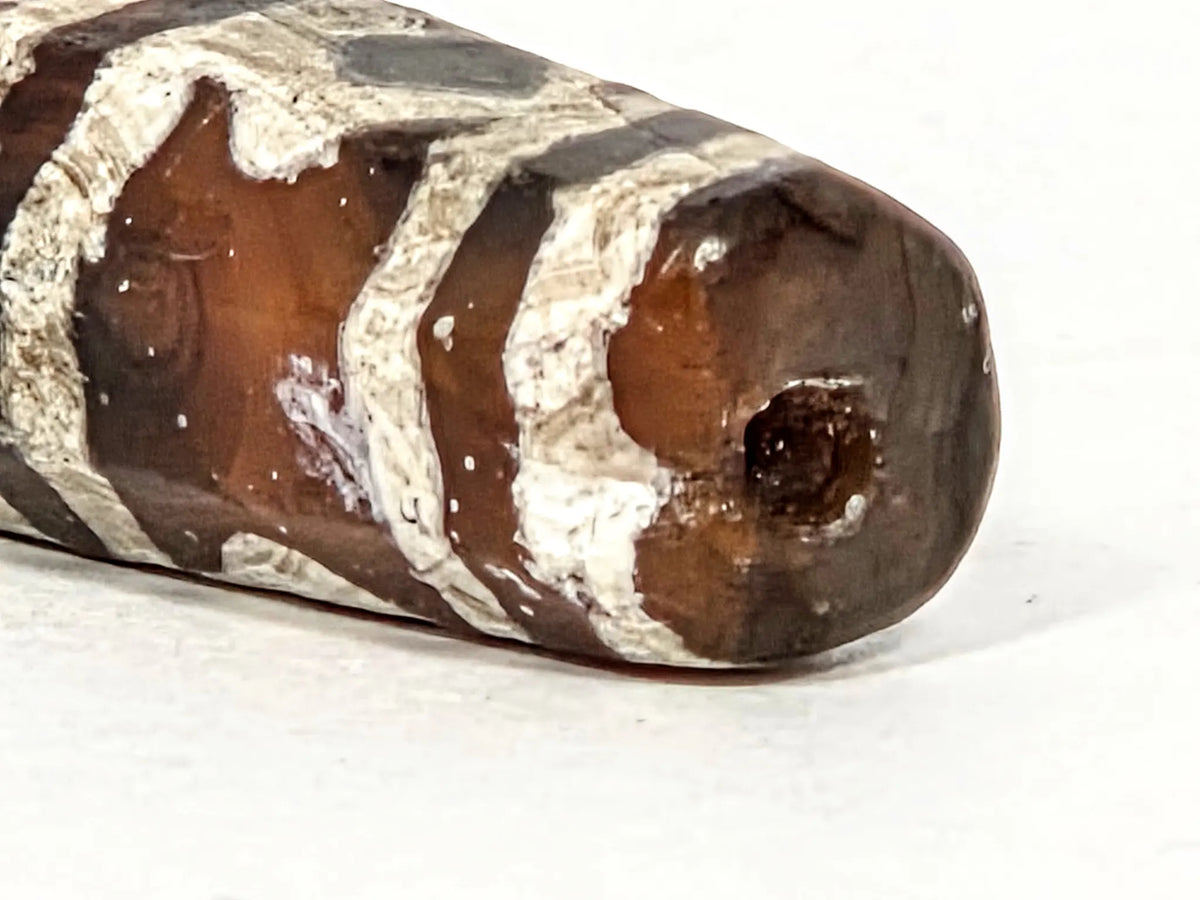
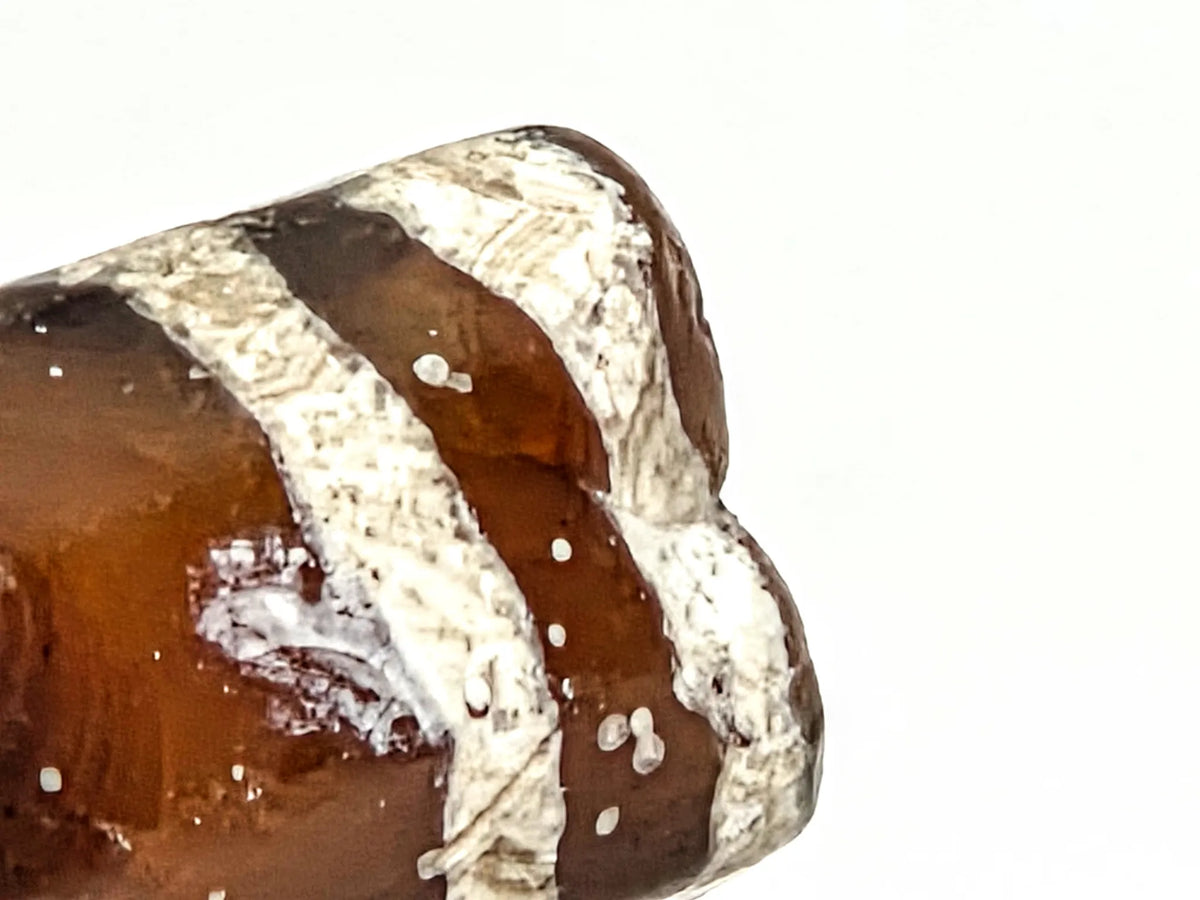
The etching is executed in silver-white lime, the technique characteristic of ancient etched carnelian production in this period and region: an alkaline paste applied to the stone surface, fired, and then rinsed to leave the etched areas permanently whitened. The etching has the granular, crystalline texture visible in the macro photographs — slightly raised and rough relative to the polished carnelian ground — which develops in genuine ancient lime-etched pieces over centuries and is distinct from the smoother surface of more recent imitations. The motif is geometric: repeating diamond and lozenge-form units, framed by vertical band line separators between the faceted sections and horizontal band lines at both end cap zones. The individual motif elements resolve as diamond-outline forms with interior eye shapes on the primary faces, and as grid and band compositions on the secondary faces — the full motif composition distributes across the eight faces in a way that rewards examining the bead from multiple angles.
There is a shallow indentation — a divot in the carnelian surface — visible in the macro photograph (image 8). This depression was present in the stone at the time of crafting: the lime etching covers it continuously, without interruption or variation at the divot's edges, which confirms that the surface treatment was applied after the indentation already existed in the stone. It is not damage sustained after the bead was made. The bead-maker worked the stone as found, incorporating the natural surface feature into the piece rather than discarding the material. This kind of inclusion is part of what characterizes genuinely ancient hand-worked pieces, where the maker worked with the stone's natural character rather than against it.
Both drill holes are in the warm carnelian tips at each end of the bead, where the plain undecorated carnelian face is visible at each aperture. The drill holes are functional and clear.
Ancient Etched Carnelian
Etched carnelian beads are among the oldest continuously produced decorated beads in the ancient world, with production documented from the Indus Valley Civilization onward. The lime-etching technique — applying an alkaline paste to the carnelian surface and firing it to produce permanent white markings — was developed in the third millennium BCE and continued in use across Central and South Asia through the medieval period. Beads of this type were trade objects as well as personal ornaments, and their distribution across archaeological sites from the Arabian Peninsula to Southeast Asia reflects the reach of the trade networks through which they moved. The geometric motifs — diamonds, lozenges, eyes, bands — carry symbolic associations with protection and auspiciousness that varied across the cultures that used them, but the beads themselves were universally recognized as objects of value and meaning.
Specifications
Motif: Geometric — diamond and lozenge-form units with interior eye shapes on primary faces; grid and band compositions on secondary faces; vertical band separators between faceted sections; horizontal band lines at both end cap zones; silver-white lime etching
Length: 31.1 mm
Diameter: 10.4 mm
Form: Eight-sided (octagonal) faceted barrel
Material: Natural carnelian
Color: Warm reddish-brown to deep amber carnelian ground; silver-white lime etching
Age Estimate: Ancient — 700–1000 years
Condition: Good. Etching intact across all faceted faces. Natural indentation (divot) in carnelian surface, present at time of crafting — etching covers it continuously, confirming it predates decoration; not post-crafting damage. Both drill holes functional.
Bloodspots: N/A (carnelian)
Product ID: AC-101226-EC
Collections: Ancient Dzi · All Products
Other ancient beads in the collection:
- AC-101126-RS — Ancient Round Agate Bead, Stars Motif, 22.3 mm
- AC-B-092526-9E — Ancient Nine-Eye Dzi Bead with Bloodspot Patina, 45.5 mm
- AC-091626-9E — Ancient Nine-Eye Dzi Bead, 53 mm, Dark Brown
Further reading: How to Identify Genuine Ancient Dzi Beads · Tibetan Dzi Beads: Luck, Fortune & Meaning
Every piece at Ancient Dzi Shop is photographed unretouched and described exactly as found. What you see is what you will receive.
Photos: Unretouched images of the exact bead listed. Nine product photographs: four white-background lateral profile views showing the eight-sided faceted barrel form, the etched geometric motif composition, and the bead from different rotational angles; two angled end views showing both drill hole apertures and the octagonal cross-section; one macro close-up of the drill hole tip in warm carnelian (image 7); one macro showing the octagonal faceting and crafting-era indentation covered by etching (image 8); one extreme macro showing the crystalline etching surface texture and carnelian ground (image 9).
#ancientethedcarnelian #carnelianbeads #etchedcarnelian #ancientbead #himalayanbead #ancientamulet #etchedbead #ancientdzishop #dzicollector #tibetanantiques #agatebeads #ancientstone #carnelian #islamicbead #ancientjewelry
Couldn't load pickup availability